
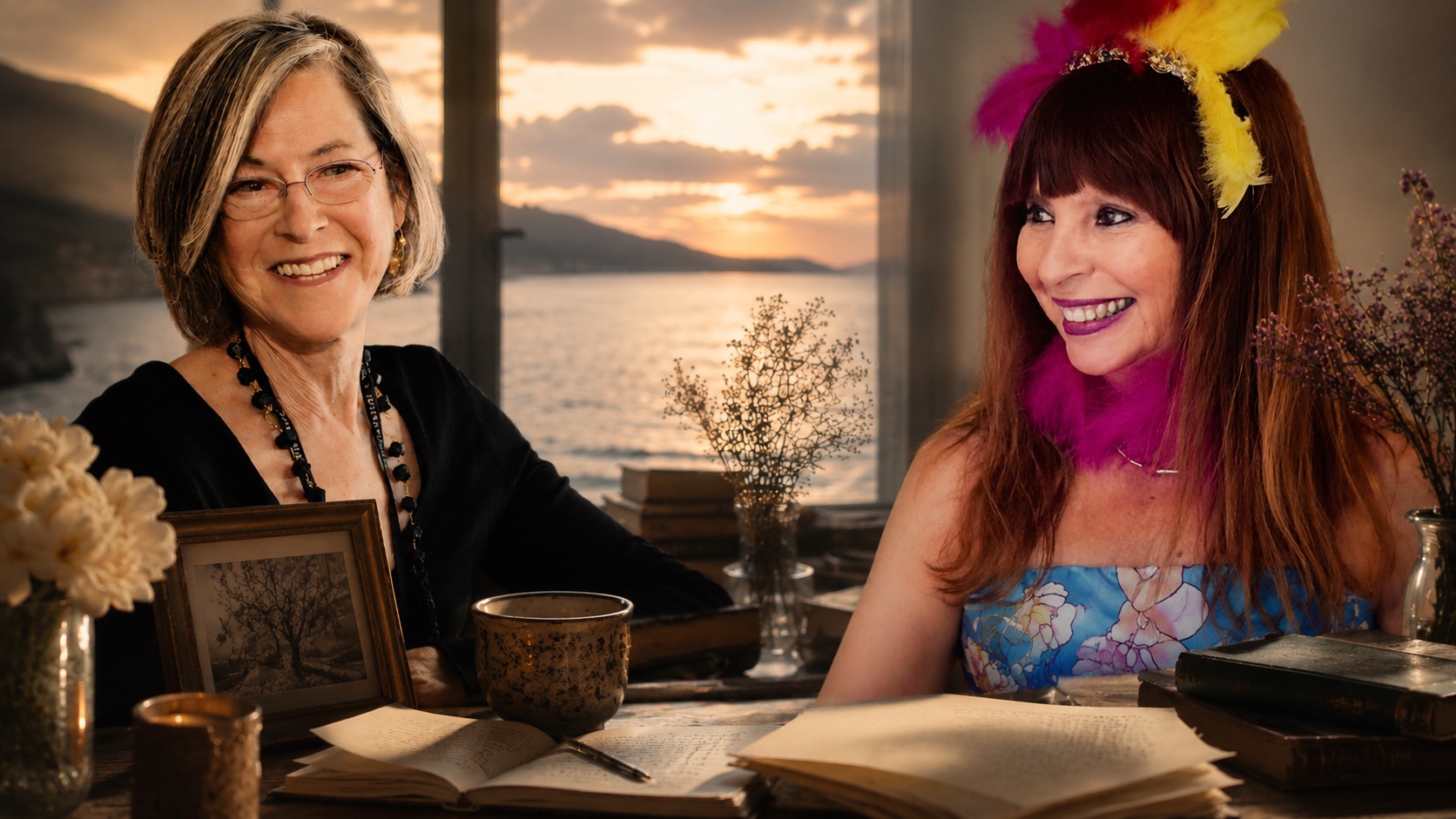
At its deepest level, genuine poetry often emerges from what could never be fully lived. Some writers turn experience into spectacle; others reduce it to the glow of a banked ember. Among the latter are Marília Arnaud and Louise Glück — two authors separated by language, geography, and literary tradition, yet united by a shared emotional discipline: the art of withholding in order to reveal.
To read them is to enter nearly empty rooms. Not empty of life, but of noise.
In a contemporary literary culture increasingly shaped by emotional overexposure and the constant pressure of self-performance, such restraint feels almost radical. Their work rejects the inflation of feeling that dominates much contemporary writing. Instead, both cultivate a prose and poetic sensibility grounded in precision, omission, and tonal control.
Arnaud writes as though handling fragile objects in darkness: each memory is approached cautiously, as if excessive pressure might shatter it. Glück, in poetry of almost mineral clarity, transforms intimate suffering into austere symbolic landscapes where grief ceases to belong exclusively to the self and acquires something ritualistic, nearly timeless.
What links the two writers is not merely solitude as subject matter, but a deeper understanding of silence as a literary form. In lesser writing, silence often functions as absence; in theirs, it becomes substance. Sentences end before emotional culmination. Images dissolve before explanation arrives. Characters carry griefs that remain deliberately unnamed. This refusal of catharsis produces a rare effect: the reader does not simply witness emotion but inhabits its atmosphere.
Perhaps this explains why their work resists sentimentality even when dealing with familial loss, romantic fracture, or the muted melancholy of ordinary life. Neither writer seeks consolation. Instead, an austere lucidity runs through their work, as though both understand that certain wounds never disappear; they merely acquire new forms of endurance.
In Glück’s poetry, this awareness frequently assumes a mythic dimension. Gardens, flowers, seasons, and figures from classical mythology become symbolic architectures capable of organizing inner chaos. Personal suffering dissolves into a larger temporal order, something nearly ancestral. Arnaud, by contrast, remains closer to the tactile reality of Brazilian domestic life: silent apartments, strained family bonds, memories saturated with heat, fatigue, and emotional erosion. Her fiction does not depend upon allegory. It emerges from the slow corrosion of intimacy itself.
And perhaps therein lies the deepest distinction between them. Glück contemplates suffering as one might contemplate winter: inevitable, cyclical, impersonal. Arnaud perceives it as something immediate and almost physical — an emotional exhaustion accumulated through interrupted gestures, unfinished conversations, and affections worn thin by time. One constructs symbolic architecture; the other gathers the fragments left upon a table after someone has quietly departed.
Yet both share a profound distrust of grandiloquence. At a moment when many literary voices mistake intensity for excess, their work reminds us that genuine depth rarely announces itself loudly. It breathes softly. It moves through pauses, spare language, and incomplete images.
This may be the most enduring quality of intimate literature at its highest level: its capacity to continue resonating long after the reading ends. Not through revelation or dramatic resolution, but through the gradual infiltration of mood and perception. Certain poems by Glück and certain pages by Arnaud create precisely this sensation — the feeling that something delicate and irreversible has passed silently through the reader, altering, almost imperceptibly, the texture of the world.
As with the most mature works of literature, the lasting impact emerges not from what is declared, but from what remains suspended. Some writers attempt to answer human anguish; others, more rare, merely illuminate its contours with enough precision that we are forced to recognize them. It is within this territory of restraint, memory, and vulnerability that Marília Arnaud and Louise Glück ultimately converge: two writers who understand that literature often becomes most powerful precisely when it abandons the urge to explain and accepts, with disciplined clarity, the permanence of the unsayable.
Palmarí H. de Lucena