
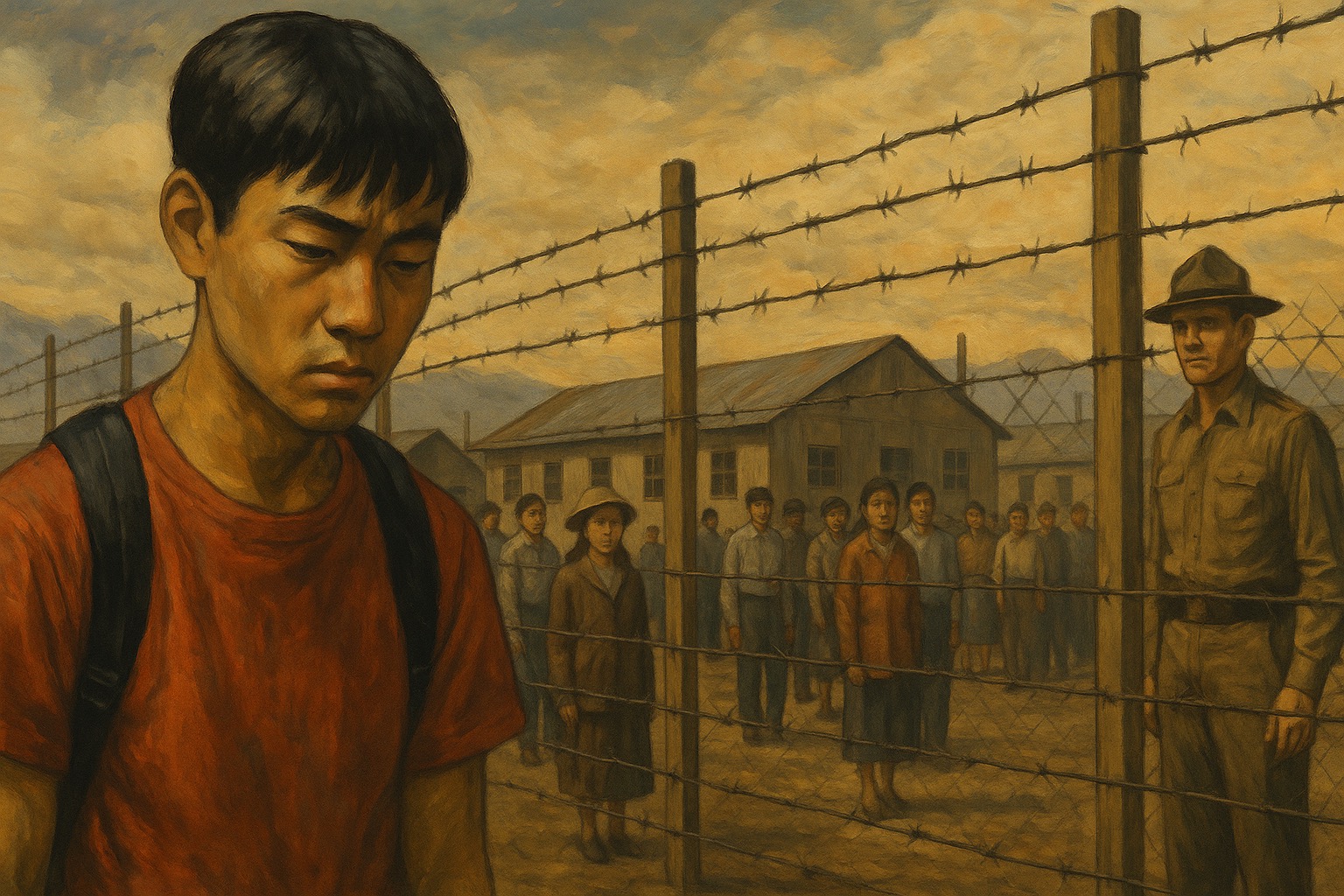
Brazil, the Persecution of Japanese Descendants, and the Racism Hidden in Ordinary Language
Some histories stay buried not because the records are missing, but because acknowledging them would demand more of a country than it is ready to give. Brazil’s role in the persecution of Japanese immigrants and their descendants during World War II belongs to that category: uncomfortable, rarely spoken of, and still awaiting reckoning. The violence of the era did not erupt suddenly with the war. It was rooted in suspicions, pseudoscience, and cultural prejudice that had been building since the 1930s — prejudices that linger today in ways many Brazilians barely notice.
Long before Pearl Harbor, Japanese communities in Brazil lived under a quiet but insistent scrutiny. Getúlio Vargas’s authoritarian Estado Novo embraced nationalist ideology and the racial fantasies of the period, including the notion that Brazil should “whiten” itself. Japanese immigrants — farmers, shopkeepers, teachers — were cast as perpetual outsiders. Intellectuals confidently declared them “inassimilable,” incapable of joining the national project. These ideas became policy: restrictions on Japanese-language education, censorship of community newspapers, surveillance of rural settlements, and attempts to scatter families across the interior to prevent cohesive communities from forming. O Silêncio que Perdura- O Bras…
This atmosphere of suspicion seeped into the cultural bloodstream. In the Brazil of the mid-20th century — and, notably, in much of Brazil today — Asian identity could be collapsed into an easy label. The word japa, sometimes offered as an affectionate nickname, performs a subtle violence: it flattens individuals into a stereotype, blurs cultural distinctions across an entire continent, and revives the old Brazilian habit of naming the other by appearance. What sounds harmless to some carries the weight of a long racial hierarchy for others.
There is a revealing parallel in the United States. There, the term Jap is a fully acknowledged slur, sharpened during wartime into a tool of propaganda and dehumanization. The word helped justify the incarceration of 120,000 Japanese Americans in camps across the West. In the U.S., the term hurts; in Brazil, its softer cousin numbs. The difference isn’t moral — it’s historical self-awareness. America, for all its failures, eventually confronted the memory of its camps. Brazil largely chose not to. And because of that absence, the country continues to mistake its own diminutives for kindness, even when they are born from the same impulse to reduce and contain.
When Washington pressured Latin American countries to support its wartime “hemispheric security” mission, Brazil was ready. A government already policing Japanese culture at home was quick to collaborate. It helped identify, track, arrest, and ultimately deport Japanese Brazilians to U.S. internment camps in Texas and New Mexico.
At least 160 people — many of whom had lived in Brazil for decades — were handed over to American authorities and shipped to Crystal City, Kenedy, and Santa Fe. They became diplomatic currency. Their only crime was their ancestry. In cooperating, Brazil endorsed the fiction that every person of Japanese descent posed an intrinsic threat.
Inside its own borders, the state imposed curfews, confiscated property, banned fishing in strategic regions, and detained individuals without charge in places like Ilha das Flores and the Frei Caneca prison. Families saw their schools shuttered, their crops seized, their autonomy stripped away. Japan’s surrender brought an end to the formal measures — but not to the forgetting.
The United States, late but eventually contrite, issued a formal apology in 1988 and compensated survivors. Brazil offered no apology, no inquiry, no compensation. The discrimination that preceded the war, and the persecution the war enabled, simply sank into the sediment of national silence.
Silence, however, is not neutral. It accumulates. It distorts. It allows a society to inherit old injustices without ever recognizing their shape. To confront Brazil’s history with its Japanese community is not to reopen wounds; it is to prevent the combination of fear, authoritarianism, and racialized suspicion from finding new forms. And it is to recognize that language — including the seemingly innocuous japa — is a clue to the structures that have long reduced and marginalized.
Brazil’s Japanese-descendant community — resilient, disciplined, and deeply woven into the country’s cultural and economic fabric — deserves more than silence. It deserves truth spoken plainly and publicly. Not as a gesture of guilt, but as an act of democratic maturity. A nation cannot move forward while its past remains a shadow. Only when memory becomes a shared responsibility does the future truly come into focus.
by Palmarí H. de Lucena
NOTA: Adaptado do texto original: O Silêncio que Perdura: O Brasil, a Perseguição aos Nipo-descendentes e o Racismo que a Linguagem Revela