
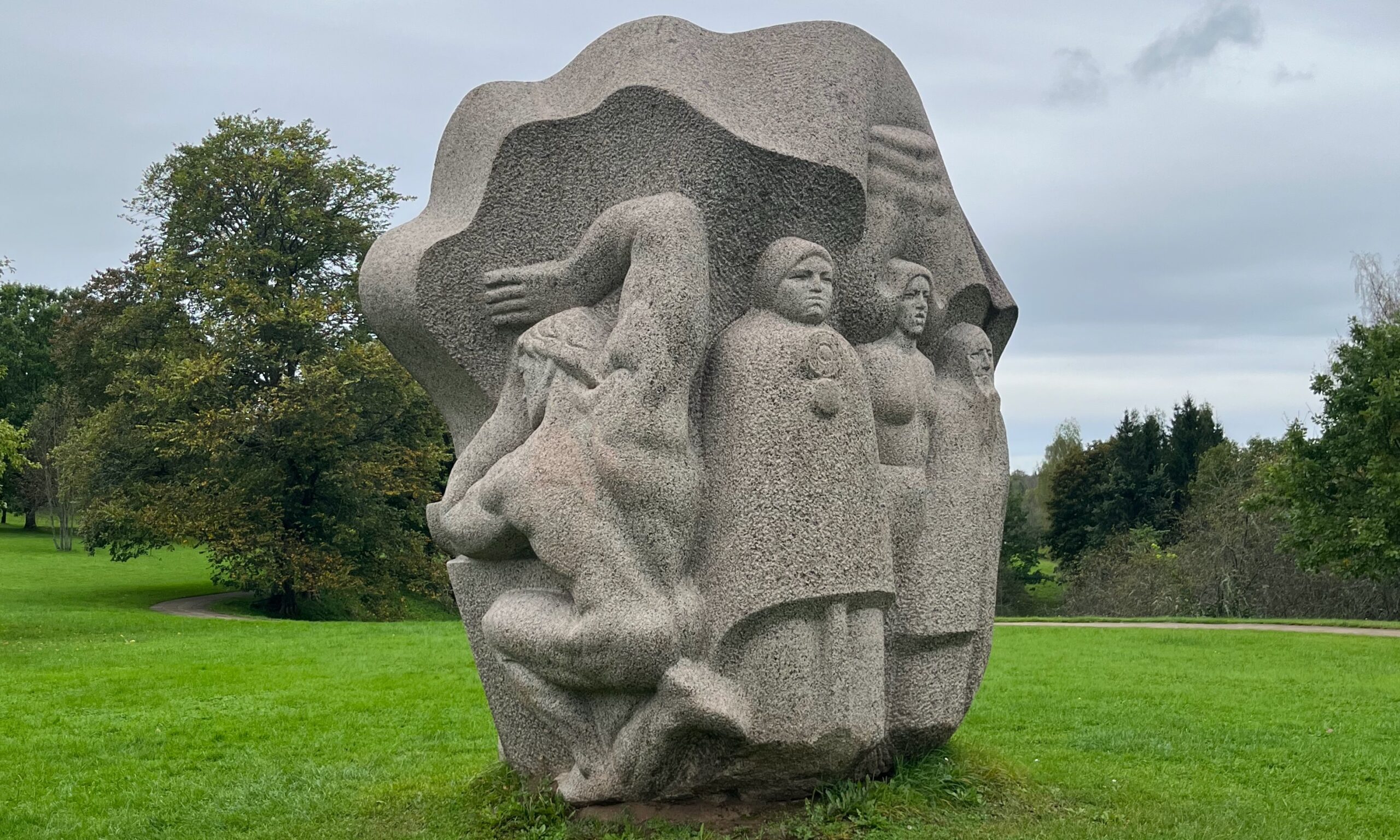
Arriving at the Monument to Folk Songs in Sigulda, on the so-called Hill of Dainas (Dainu Kalns), I felt as though I were standing before a score carved in stone. Created by the sculptor Folkvar Zariņš, the ensemble rests in the heart of the Gauja Valley, surrounded by green hills and the deep silence of forests. Here, among pine trees rising like guardians and the whisper of wind coursing through the valley, the landscape seems to converse with the grandeur of the inscriptions. Each symbol, each verse whispered centuries of resistance.
The dainas—four-line songs passed down through centuries—were the invisible mortar that held the language alive. While schools and administrations imposed foreign tongues, the people preserved their identity in song. It was in villages, around hearths, in harvest fields, and at solstice festivals that the Latvian tongue was polished and safeguarded, like a precious stone resisting erosion.
Standing before the stones in Sigulda, I could not help but recall another monument—intangible yet eternal—raised by human voices themselves. On August 23, 1989, nearly two million people joined hands in an unbroken line stretching almost 600 kilometers, linking Tallinn to Vilnius through Riga. They called it the Baltic Chain.
There were no war banners, only songs sung in native languages, echoing as a collective prayer. Song, which for centuries had preserved cultural identity against the silence imposed by foreign rulers, became the invisible cement of peaceful resistance. Every verse sung in that human chain was more than music: it was a declaration of belonging, a promise of freedom. In that simple gesture—holding a neighbor’s hand and singing the same song—Latvia, Lithuania, and Estonia transformed fragility into strength. They showed the world that a people can free themselves not only through confrontation, but through song, culture, and faith in their own voice.
The Sigulda monument celebrates this silent victory: the transformation of an oral heritage into a lasting legacy, not only preserving but also modernizing the language. Today, Latvia invests in linguistic research centers, in song festivals that unite tradition with innovation, and in school programs that place the native tongue at the heart of cultural life. This is not nostalgia—it is affirmation. It is the recognition that without the language, without the songs, there would be no homeland.
As I touched the cold inscriptions on the stone, I thought of the courage of a people who never stopped speaking in their own voice. Modernizing the language is not a rupture with the past but a bridge: linking the ancestral verses of the dainas to the vocabulary of the twenty-first century. It was as though the monument itself whispered: “Keep singing, for in song freedom finds its dwelling.”
In the end, one understands that music wields a power no weapon can reach: it unites voices, reconciles differences, and creates belonging. Song is more than art—it is an instrument of communication and of preserving national culture, strong enough to endure centuries of domination and remain whole. That is why governments must recognize and support choirs, folk dances, and musical traditions not merely as entertainment, but as tools of education, citizenship, and the formation of unity and national identity.
By Palmarí H. de Lucena