
An African Journey Through Memory, Identity, and the Future of a People
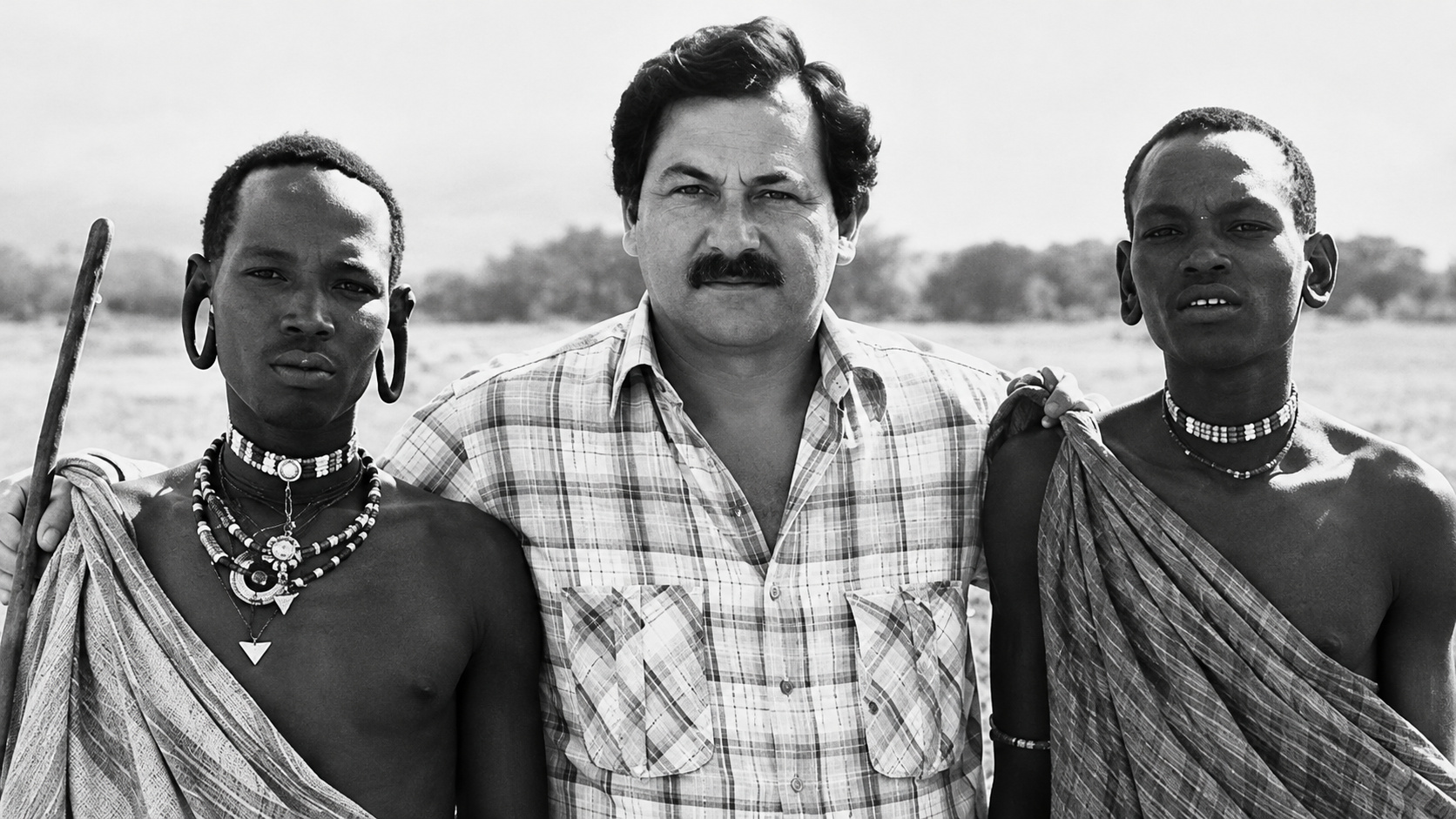
More than four decades ago, somewhere in Kenya, I photographed two young Maasai men. The image has remained with me over the years, quietly raising questions that time has never answered. Where are they now? What became of their families? Did they remain on their ancestral land? Were they able to keep their cattle, goats, and sheep? And what kind of world did their children inherit?
A photograph can preserve a moment, but it cannot tell us what happened next. Looking at those two young men today, I find myself thinking less about the past than about the uncertain future of an entire generation.
To understand the Maasai is to understand a relationship with the land that goes far beyond ownership. In the semi-arid landscapes of southern Kenya, land is not simply a commodity, a boundary on a map, or an asset to be bought and sold. It is the foundation of survival. It provides grazing for livestock, access to water, room for seasonal movement, and the possibility of sustaining a way of life developed over generations.
For the Maasai, mobility has never been a luxury. It has been a necessity.
Their traditional settlements, known as bomas, are much more than clusters of houses. They are the center of family and community life, organized around homes, livestock enclosures, and the bonds between generations. Cattle, goats, and sheep represent wealth, but also food, security, identity, and continuity. The animals are woven into almost every aspect of daily existence.
In a region where rainfall is unpredictable and drought can transform the landscape, the ability to move herds from one grazing area to another can determine whether a family survives the dry season. A piece of land that looks sufficient on a property map may prove entirely inadequate when the grass disappears and water sources dry up.
I came to understand this connection more closely during a humanitarian mission to help develop wells in Maasai territory. The experience offered a glimpse into the daily realities of communities whose lives depend so directly on natural resources.
Water, in particular, is never an abstract issue here. It determines where people can live, how far their animals can travel, what families can eat, and how much energy must be devoted to the simplest tasks of everyday life.
During that experience, I also became familiar with an ancestral dietary practice: on certain occasions, Maasai families consume milk mixed with a small amount of cattle blood, collected without killing the animal. To an outsider, the practice may seem unusual. Within the pastoral system, however, it reveals something essential: livestock are not merely economic assets. They are a direct and indispensable source of nourishment.
Yet this relationship between people, animals, and territory has been increasingly challenged by changes in the way land is owned and managed.
In areas such as Kajiado, traditional systems of communal land use have gradually given way, in part, to individual land subdivision. The promise was modernization: private property, investment, access to credit, and greater economic opportunity.
But the logic of private ownership does not always fit the realities of pastoral life.
A fence may make sense to someone looking at a property boundary. To a herder searching for pasture after months without rain, it can represent a dead end. When traditional grazing corridors are closed and once-shared territories are divided into individual plots, the freedom to move livestock becomes increasingly restricted.
The consequences are not evenly distributed. In some communities, land allocations have favored local leaders and influential individuals, while ordinary members have faced smaller holdings, ownership disputes, and difficulties securing legal titles. The sale of land has introduced another layer of vulnerability.
For a family facing immediate financial pressure, selling part of its property may seem like a practical solution. But the money eventually runs out. The land does not come back.
What may appear to be a short-term financial decision can therefore become a permanent loss of the resources needed to sustain future generations.
Climate change has made this situation even more precarious.
Across Kajiado, Narok, and the Amboseli region, irregular rainfall, rising temperatures, and prolonged droughts are putting additional pressure on already fragile ecosystems. Pastures become scarce. Animals lose weight. Milk production declines. Herds grow smaller, and livestock mortality increases.
The tragedy is that these environmental pressures are unfolding at the same time that the traditional spaces needed to respond to them are becoming increasingly fragmented.
When drought arrives, pastoral communities need flexibility more than ever. They need access to alternative grazing areas, reliable water sources, and the freedom to move their animals. Yet these are precisely the resources that are becoming harder to secure.
The effects extend far beyond livestock and household income.
When water becomes scarce, families may have to travel greater distances to collect it, sometimes relying on sources of questionable quality. Limited sanitation increases the risk of disease. Reduced milk production and fewer available food resources deepen nutritional insecurity, particularly among children.
Medical care may be distant and expensive. Women frequently carry much of the responsibility for collecting water and caring for their families, and that burden becomes heavier during periods of drought. Children may miss school to help with domestic tasks or accompany livestock in search of pasture.
This is the less visible side of the Maasai story. It is rarely captured in the photographs that circulate around the world.
Visitors often encounter the Maasai through their distinctive clothing, traditional ornaments, dances, and ceremonies. These are important expressions of cultural identity, but they represent only one dimension of a much more complex reality. Behind the images lies a daily struggle involving land rights, food security, education, health, and access to the most basic resources.
Meanwhile, a new generation is facing choices that previous generations could scarcely have imagined.
Education, university opportunities, technology, and paid employment are opening doors beyond the traditional pastoral economy. Many young Maasai want to study, pursue professional careers, and build lives different from those of their parents.
There is nothing inherently contradictory about these ambitions and the preservation of Maasai identity. Culture is not a museum exhibit, and tradition does not require people to reject change.
The real problem arises when leaving becomes a necessity rather than a choice.
When the land can no longer sustain a family’s livestock, when water is inaccessible, and when local economic opportunities are insufficient, young people may find themselves forced to abandon a way of life not because they have freely chosen another future, but because the conditions for remaining have disappeared.
Cultural continuity cannot rest on the shoulders of young people alone. Knowledge of livestock, medicinal plants, water sources, grazing patterns, and seasonal cycles is passed from one generation to another. But such knowledge can only remain meaningful if communities have the conditions to practice and transmit it.
Women, young people, and families with less economic or political influence must also have a meaningful voice in decisions concerning land and natural resources. Without their participation, development initiatives and changes in land ownership risk reinforcing existing inequalities rather than strengthening communities.
The future of the Maasai should not be framed as a choice between tradition and modernity. Nor should it be reduced to a romantic debate about whether people should remain pastoralists or move into cities.
The question is whether they will have the freedom and resources to decide for themselves.
That requires more than cultural recognition. It requires clean water, sanitation, accessible healthcare, education, and viable economic opportunities. It also requires protecting communal grazing areas, restoring degraded pastures, developing water-storage systems, providing veterinary services, and maintaining the corridors through which herds have traditionally moved.
Private property may have a role in this process, but it cannot be treated as a universal solution in places where survival depends on access to extensive shared territories. Individual and family land rights can coexist with collective arrangements that protect essential natural resources.
Ultimately, development should expand choices, not eliminate them.
I return, once again, to the photograph of those two young Maasai men taken more than forty years ago. I do not know what became of them, and I will not pretend to know the stories of their lives. Perhaps they remained on their land. Perhaps they moved elsewhere. Perhaps their children have found opportunities that were unavailable to them.
The photograph cannot answer these questions. But it has become a reminder of something larger: the future of a people is shaped not only by their traditions or aspirations, but also by the conditions that allow them to build their lives.
The Maasai are not figures frozen in an exotic African past, preserved for the curiosity of travelers. They are living communities, raising children, managing resources, confronting economic pressures, adapting to environmental change, and negotiating their place in a rapidly changing world.
A boma without water is a threatened home. A herd without pasture is an endangered livelihood. A fragmented territory may no longer sustain families whose ancestors lived there for generations.
Perhaps this is the most important lesson I have carried from Kenya: preserving a culture means protecting the conditions that make its continued existence possible.
The future of the Maasai is inseparable from their right to remain, to move, to produce, and to participate in decisions about their ancestral territory. When access to land disappears, the loss extends far beyond geography. It reaches into food security, family autonomy, community relationships, and the transmission of knowledge.
The two young men in my photograph belonged to a generation whose future was still unfolding. Their children and grandchildren now face a different landscape, shaped by new opportunities but also by growing uncertainties.
We should not ask them to choose between their roots and their future.
We should ask whether the world is willing to ensure that they have both.
Because the survival of the Maasai is not simply about preserving an ancient way of life. It is about defending the right of a living people to shape their own future — on their own land, according to their own choices, and with the dignity that every community deserves.
Palmarí H. de Lucena