
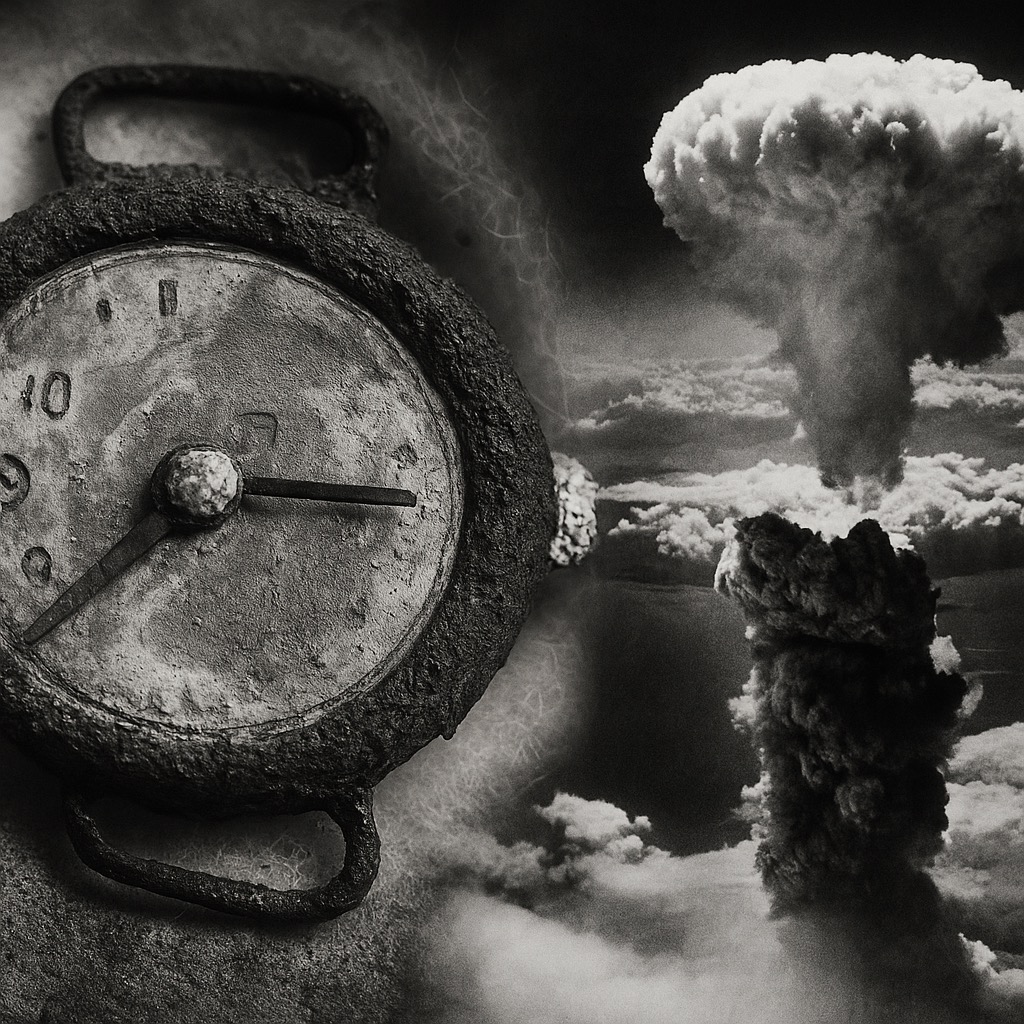
Eighty years ago, on August 6, 1945, the B-29 bomber Enola Gay took off from Tinian Island on a mission that would forever change the course of world history: the dropping of the first atomic bomb on Hiroshima. The oral history of the crew, recorded in Garrett M. Graff’s book The Devil Reached Toward the Sky, reveals in detail the professionalism, tension, and emotional impact of that decisive moment.
Recently, I had the opportunity to visit Hiroshima — an experience that made the magnitude of that tragedy tangible and visceral. The Peace Memorial, with its sober architecture and calm atmosphere, painfully contrasts with the images and videos displayed at the city’s museum, which bear witness to the immense destruction and the piercing fear endured by survivors. Walking among accounts and artifacts, I felt the weight of silence from those who lost everything and the resilience of those who remained.
The Enola Gay pilots’ narrative describes a different environment: calm, focused, and with an almost emotional detachment, born from the necessity to carry out a complex and dangerous mission. They speak of technical precision, the beauty of the sky, and even unusual physical sensations — like the taste of lead in Colonel Tibbets’s mouth caused by radiation. Yet this technical atmosphere contrasts with the devastation below, where thousands fell victim to an unimaginable force.
Today, Hiroshima is a voice that calls for peace and an end to the cycle of hatred and retaliation. The city stands as a global symbol against the use of the atomic bomb as a weapon of war — a plea that sadly seems to weaken amid current geopolitical tensions and the resurgence of armament.
This personal visit made me understand the urgency of learning from the past. Science and technology, while capable of extraordinary advances, carry a tremendous responsibility — to ensure their power is never used to annihilate human lives on such a brutal scale. The oral history of those involved, combined with the living memory of the memorial, imposes upon us a profound ethical reflection.
The flight of the Enola Gay was not just a military episode; it was an existential milestone for humanity. It challenges us to ponder not only technological progress but our political and moral choices. May the memory of those lost lives and Hiroshima’s scars illuminate a path where dialogue, justice, and peace prevail.
Thus, as we remember the past, let us renew our commitment to prevent the horror of that morning from ever repeating, building a future where the power of destruction is surpassed by the power of humanity.
By Palmarí H. de Lucena