
Some encounters reveal their importance only years later.
We met Melvin Edwards and Jayne Cortez in Harare, Zimbabwe, in 1988. We had arrived for a four-year assignment and, while waiting for permanent housing, were staying at a local hotel. We had no house yet, no routine, and little sense of what those four years would become.
Harare still carried the marks of a recent independence. Zimbabwe had become independent in 1980. In conversation and on the road, there was Mozambique, Angola, Namibia, South Africa. The Front Line States were always somewhere in the background. Politics crossed the roads with us.
We traveled a great deal. There were long drives, border posts, roads that seemed to go on forever, and towns where we arrived knowing no one. Gradually, the names on the map became places we had actually seen.
It was during those years that we met Mel.
I remember his presence before I remember exactly what we talked about. He was a large man, with a firm voice, someone who seemed naturally to occupy whatever space he was in. Conversation with him rarely moved in a straight line. We might begin with one thing and, a few minutes later, be talking about an artist, a country, an exhibition or something from his life in the United States.
Jayne was often nearby. Her presence was different. Poetry entered the conversation almost without announcement, sometimes in a phrase that stayed with us after the subject had changed.
Mel talked a great deal about Africa. He also talked about the United States, Brazil and Cuba. There was always another place entering the conversation.
Only later did I understand that movement better.
Mel worked in steel. When I think now of Lynch Fragments, I remember the chains, the hooks, the pieces of metal. At the time I did not try to interpret them. They were simply part of the work of a friend. Only later did I begin to see how much of the history we talked about was already present in those materials.
Jayne had her own language. Her poetry belonged to the same landscape, though it reached us by another road.
Their friends gradually became part of our lives.
Among them were the Mozambican artists Malangatana and Alberto Chissano. I remember Malangatana for the intensity of his presence and for the way his paintings seemed never to be still. There were always figures, bodies, animals, faces, movement.
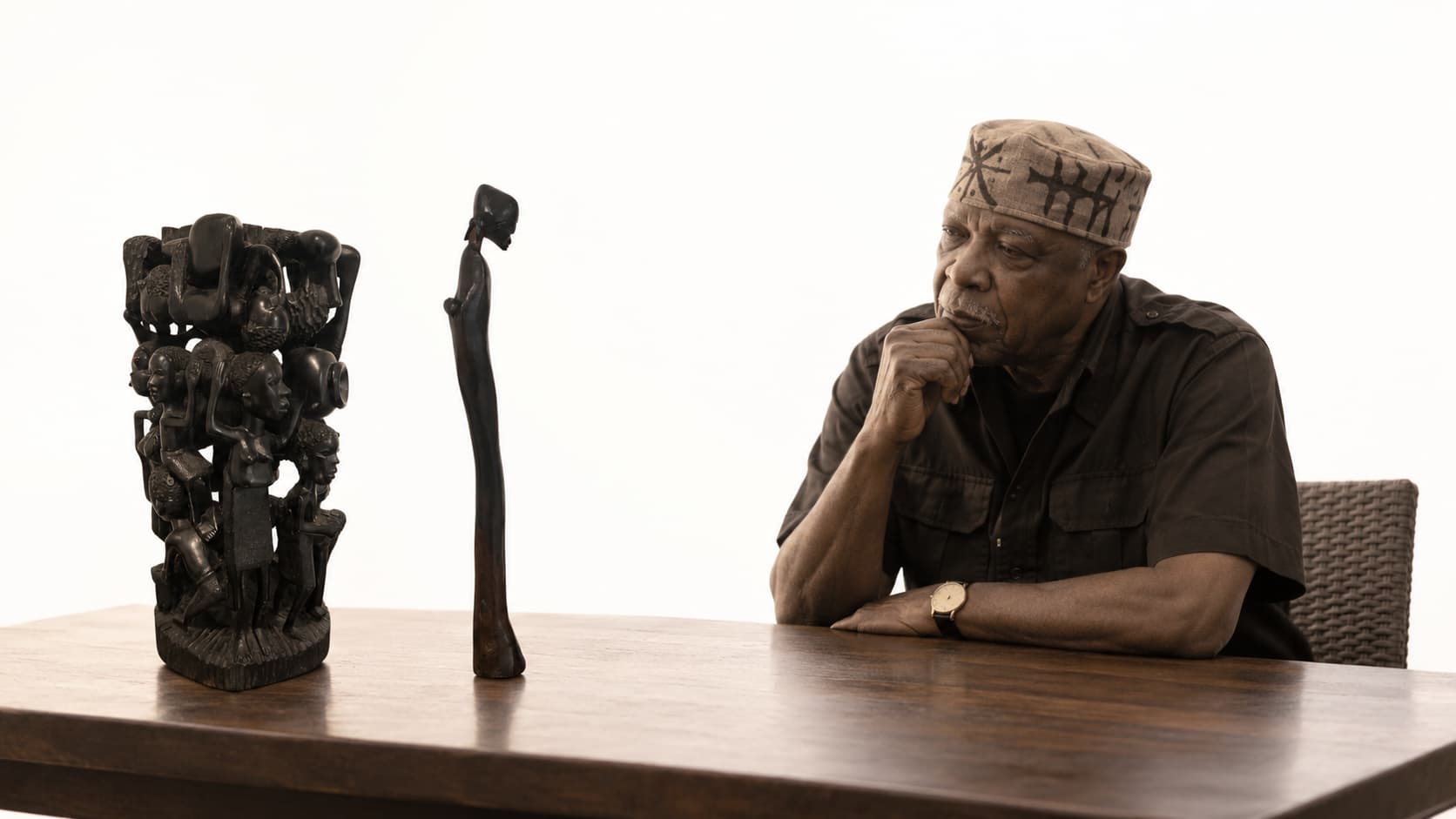
Chissano worked in wood. His sculpture had a different texture. The wood retained the cuts, the marks, the pressure of the hand. His years working in the mines of South Africa were part of his story, as they were part of the story of so many Mozambicans who had crossed that border in search of work.
Malangatana recognized Chissano’s work and encouraged him. These stories circulated among us without ceremony. They were told in conversations, between one visit and another.
That was how the artists entered our lives: first as people, and only later as names we came to recognize.
Mel and Jayne had also traveled to Brazil and Cuba. They spoke about the artists they had met, the friendships they had made, the collaborations that grew out of those encounters. Mel spoke about Brazil with particular interest. We listened without imagining that years later Brazil would become our home.
These coincidences become visible only in retrospect.
Our sons, Alexander and Paul, were still young. They grew up in that environment, among adults speaking about different countries, artists, journeys and events they could not always fully understand.
For them, Mel was simply Mel.
A large presence. Someone who belonged to that period of their lives.
When we left Zimbabwe and returned to the United States in 1992, we remained in contact. Alexander and Paul continued their own relationship with Mel and Jayne. By then, the connection no longer depended on Harare.
Meanwhile, Southern Africa was changing.
I remember Mandela’s name appearing in conversations. When we met Mel, Nelson Mandela was still in prison. Then came his release in 1990. A few years later, in 1994, he became president of South Africa.
Jayne had written Mandela Is Coming. The phrase stayed with me.
Looking back now, it is easy to put those events into a sequence. At the time, we did not experience them that way. We lived one day at a time. There was work, travel, children, dinner, conversations, departures and returns. History was happening around us, but life was happening inside it.
In 2012, by then living in Brazil, I received the news of Jayne Cortez’s death.
The news brought Harare back.
There was no need to look for photographs. The images came on their own: the hotel, the conversations, Mel, the artists, the roads, the years when our children were small.
Then more years passed.
Until the news came of Mel’s death.
Alexander and Paul told us about his passing and about the tribute being given to him at Cooper Union in New York.
I read the news and went back to the beginning.
Harare 1988.
We were still waiting for our house. Everything was still ahead of us.
I remembered Mel arriving, the conversation beginning, Jayne, and the friends who would come later.
I thought of Malangatana. Of Chissano. Of the roads. Of Southern Africa. Of Brazil, which at that time was still only something we talked about.
And then I remembered something very simple.
At that first meeting, we shared a few things and promised to share many more.
And so we did.
Palmarí H. de Lucena