
Modern history is often told as a sequence of proclamations: edicts, treaties, manifestos, poems carved into monuments. Yet much of what truly crossed the Atlantic did not do so loudly. It survived quietly, through families that learned not how to seize power, but how to live alongside it. The surname Lucena belongs to this discreet history. Emma Lazarus, in a different register, does as well. There is no documented kinship between them. What brings them together is a shared historical condition, shaped by forced conversion, displacement, and the long apprenticeship of survival within hostile structures.
Lucena was, before anything else, a place. The Andalusian city ranked among the most important Jewish centers of medieval Spain, known for its intellectual life. That world was dismantled after 1492, with the expulsion of the Jews. Many left; many stayed. Those who remained converted formally, becoming New Christians—faithful in public, heirs to another memory in private.
It was in this context that geography hardened into surname. Names such as Lucena—toponymic, Iberian, apparently neutral—became tools of adaptation. They neither proclaimed Judaism nor erased it. They allowed families to pass through baptisms, registries, and inspections. The archives of the Portuguese Inquisition, preserved today in Lisbon’s Torre do Tombo, reveal the cost of that strategy: the surname appears repeatedly in accusations of “Judaizing,” tied to domestic habits and silent rituals. The crime was not belief, but persistence. Memory itself was suspect.
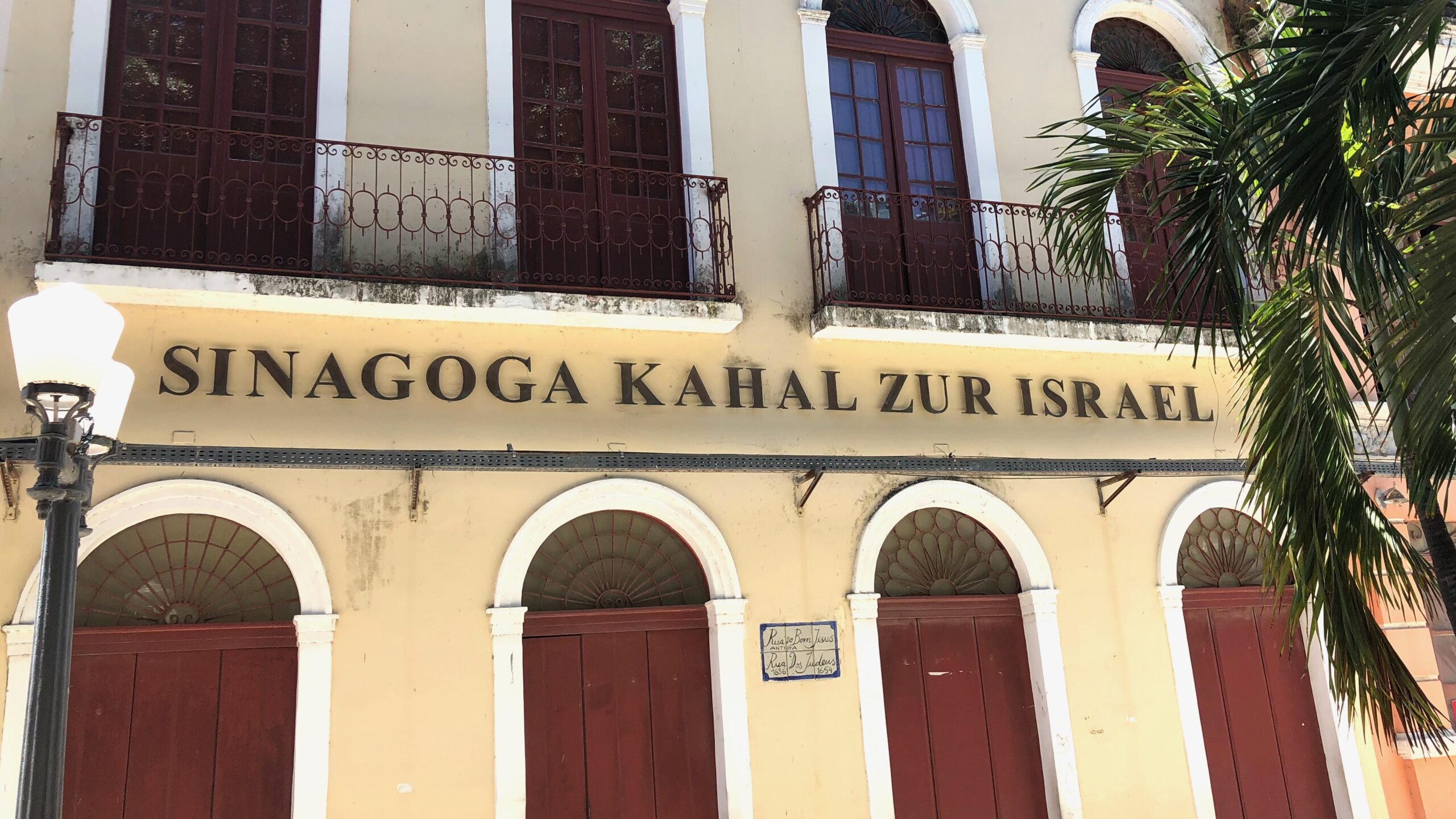
The Atlantic offered distance, not full freedom. Still, it opened breaches. In Dutch Brazil, between 1630 and 1654, a colonial anomaly emerged. Governed by the West India Company, Recife combined economic pragmatism with functional religious tolerance. Sephardic Jews—many of Portuguese origin—were able to organize communal life publicly. In 1636, they founded Kahal Zur Israel, the first synagogue in the Americas, extensively documented in commercial and administrative records.
In the archives of Dutch Recife, familiar Iberian surnames reappear: Mendes, Nunes, Pereira, Cardozo, Pacheco. These were families whose identities had been compressed by centuries of surveillance. Some branches bore the name Lucena, almost always without explicit religious identification—a reminder that even tolerance required caution.
That space closed with the Portuguese reconquest in 1654. Part of the Jewish community left Recife. A documented group traveled north to New Amsterdam, later New York, laying the foundations of the first permanent Jewish community in North America. Local records are laconic: names, transactions, civil disputes. Precisely for that reason, they are revealing. For the first time, Jews of Iberian origin appear in Atlantic archives primarily as civil actors rather than religious suspects.
The surname Lucena does not stand out in these records. The absence is instructive. While some families could reclaim Jewish visibility in New Amsterdam, others had learned different strategies. In Brazil, branches of the Lucena name remained integrated into public Catholic life, occupying local roles, forming families, accumulating continuity rather than prominence. Assimilation did not erase memory; it redistributed it. What endured survived as habit, not confession.
It is at this point that Emma Lazarus enters the picture. Born in New York in 1849, she descended from long-established Sephardic families with well-documented genealogies. There is no evidence linking her directly to Lucena lineages—and to claim such a connection would be careless. Yet to separate her entirely from this trajectory would be equally misleading. What connects them is not blood, but a shared historical grammar.
Lazarus wrote from within Sephardic, Ibero-Atlantic memory, shaped by forced conversions and successive displacements. Her poem The New Colossus, often read as a celebration of American hospitality, is also an ethical meditation on refuge, written by someone for whom exile was not metaphor but inherited experience. Families like the Lucena participated in the same Atlantic drama by different means: where some could recover visibility, others relied on cultural invisibility. The difference is not moral, but circumstantial.
The Sephardic Atlantic world did not organize itself as a genealogical tree, but as a network. Belonging depended less on surname than on shared codes: prudence toward authority, centrality of family, commitment to education, mastery of silence. Emma Lazarus turned this inheritance into poetry. The Lucena turned it into permanence.
Some names aspire to greatness. Others aspire merely to endure. In the Atlantic world, that may have been the more radical ambition.
By Palmarí H. de Lucena