
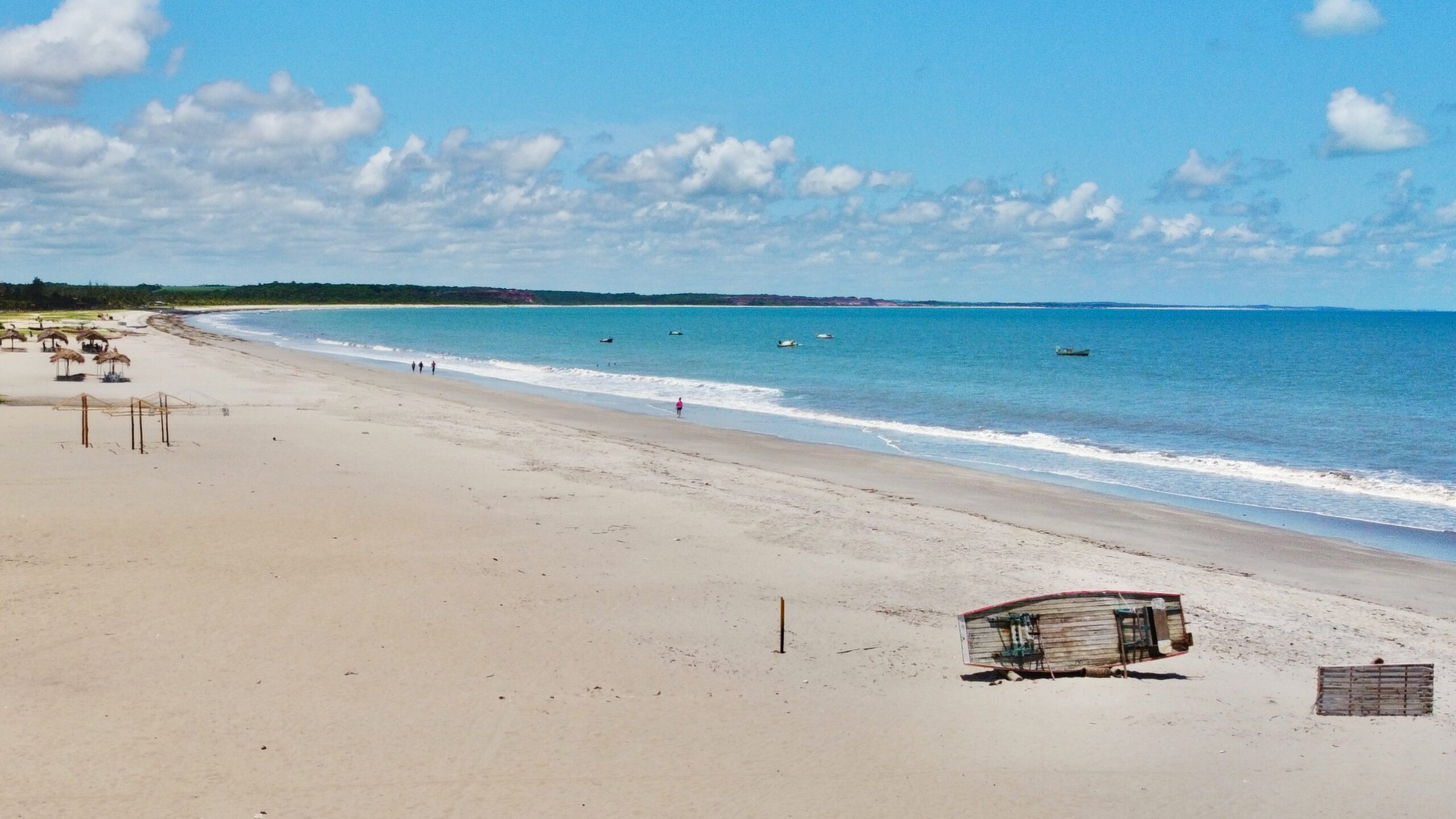
Where river and sea meet on Brazil’s northeastern coast, a town carries a name shaped by tides, crossings and the quiet dignity of work repeated over generations.
Before it became a seaside town, before vacation homes and real estate signs appeared along the coast, Lucena was a place defined by passage. Its identity emerged less from solid ground than from moving water. The wide estuary of the Paraíba River has long shaped the area—not only as geography, but as daily life.
In the 16th century, as European powers pushed into Brazil’s northeastern shoreline, this stretch of land drew attention for practical reasons: valuable timber, inland access and a strategic position facing what is now Cabedelo. The French arrived first, followed by Portuguese settlers and colonists already born in the New World. Yet none of them stamped the place with a name of authority or conquest.
Lucena’s identity took form in something far more ordinary: the act of crossing a river.
People, goods and news moved constantly between banks. For that movement to be reliable, someone had to know the tides, read the currents and navigate the quiet risks of short crossings. That figure was neither captain nor landowner, but a ferryman whose daily labor made circulation possible.
His name—Lucena—came to designate the crossing itself. Over time, common use transformed a functional reference into a place name. Not by decree or ceremony, but by repetition. Not as an official tribute, but through collective habit.
As the settlement expanded and later took on administrative form, the name remained. It endured political changes, map revisions and, eventually, the creation of the municipality in the 20th century. The ferryman faded into history, as so many anonymous workers do, but his name stayed—quietly anchored to the landscape.
Traveling through Lucena today means walking atop this unseen layer of memory. The town continues to grow, drawing new residents, hotels and investment. Yet embedded in its name is a rare reminder of origin: the trace of a job. Not a battle, not a lineage, not a heroic moment—just the persistence of someone who kept life moving across water.
In that sense, Lucena speaks less of power than of usefulness. It honors service over dominance, continuity over spectacle. Its name was earned through repetition, trust and shared necessity.
Stories like this are scattered across Paraíba, though they often go unnoticed. They are quiet markings on the map, revealing how many places were shaped not by grand designs, but by simple acts carried out day after day. To tell them is another way of traveling—not only through space, but through time.
by Palmarí H. de Lucena