
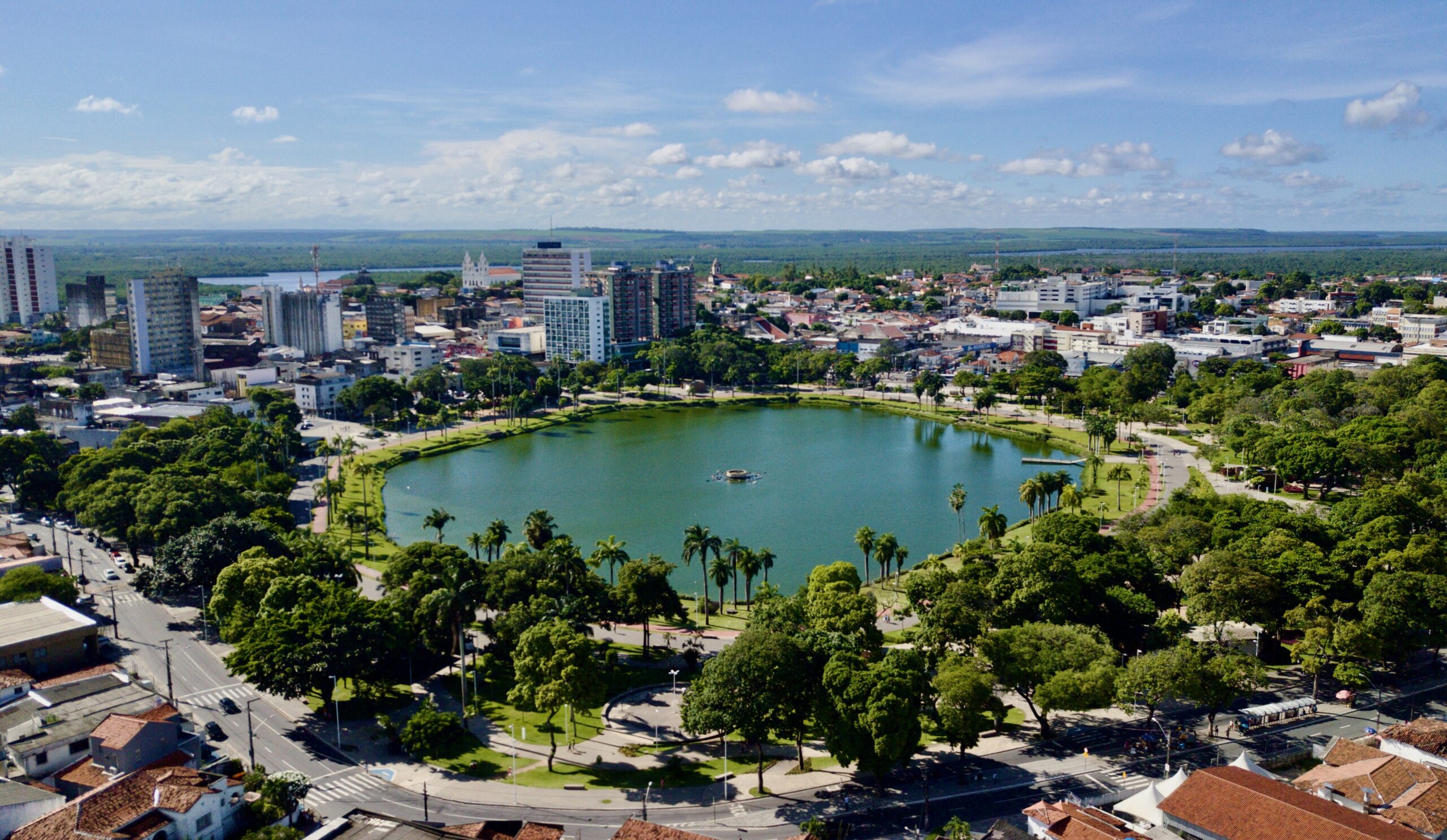
At dawn, when the first light spills across Cabo Branco Point, João Pessoa awakens softly—before any other city in the Americas. The Atlantic glows pink and gold, the ocean calm as a sigh, and the cliffs stand like sentinels between sea and sky. This is not a city you rush through; it’s one you slowly unfold, like a letter written long ago and meant to be read in the quiet.
Known as a cidade onde o sol nasce primeiro—the city where the sun first rises—João Pessoa moves at the rhythm of its tides. Life here has the tempo of a soft guitar. People stroll, not hurry; they talk in shaded squares; they still greet strangers as if friendship were a civic duty. Even the sea breeze seems unhurried, carrying with it the mingled scents of salt, coffee, and ripe mango.
Founded in 1585, João Pessoa is among Brazil’s oldest cities, but age has only deepened its grace. The historic center, with its faded pastel façades and baroque churches, overlooks the Sanhauá River in a scene that feels lifted from an old watercolor. The Igreja de São Francisco, lavish with gold leaf and blue azulejo tiles, remains one of Brazil’s most exquisite colonial treasures. A few blocks away, cafés and ateliers breathe new life into crumbling mansions. And now, at the heart of the city, the newly inaugurated Museu da Paraíba stands in Praça João Pessoa—a luminous restoration of the former Palácio da Redenção. Its galleries trace the state’s political and cultural evolution, weaving the stories of governors, poets, and everyday people into a single, elegant narrative.
By late afternoon, the sun turns the façades honey-colored, and the city hums softly with its own soundtrack: street musicians, the distant echo of a band rehearsing, the low murmur of conversation carried through open windows. João Pessoa doesn’t demand attention—it earns it quietly, one slow step, one kind gesture, one breeze at a time.
Just minutes from downtown, the Atlantic takes over the story. Along its sinuous coast, each beach has a personality: Tambaú, with its fishermen’s rafts and cheerful kiosks; Cabo Branco, framed by Niemeyer’s futuristic Estação Ciência and the sandstone cliffs that seem to guard the horizon; and Seixas, the easternmost point of the Americas, where the sun rises earlier than anywhere else. At low tide, the sea reveals natural pools that shimmer like liquid glass, and children dive into waters clear enough to mirror the sky. Watching the sun climb from the edge of the world here, you begin to understand why time in João Pessoa feels elastic—why every morning seems to hold the promise of a new beginning.
The city’s pleasures are small and sincere. Breakfast lasts as long as the conversation, with strong coffee, bolo de macaxeira, and fruit so sweet it feels like sunlight turned edible. Lunch might be grilled fish with coconut sauce, served under a thatched roof by the sea. Later, as the afternoon cools, there’s the local ritual of the cochilo—the Brazilian nap elevated to an art form. By nightfall, João Pessoa glows in candlelight and laughter. The air fills with forró rhythms and the scent of queijo coalho toasting on charcoal grills.
Culture here doesn’t shout—it lingers. The Espaço Cultural José Lins do Rêgo hosts theater and film festivals; across the bay in Cabedelo, the Forte de Santa Catarina keeps watch, its cannons now pointed not at invaders but at the infinite sea. Everywhere, there’s a sense of balance: between ocean and forest, tradition and renewal, solitude and connection.
To know João Pessoa is to slow down. It’s to measure life not by schedules but by tides. It’s to learn that gentleness can be an act of strength, and that beauty—true beauty—rarely needs an audience. When the dawn returns, and the sun rises once again over Cabo Branco Point, you realize it isn’t just the first light of the Americas you’re witnessing. It’s the quiet, recurring miracle of beginning again.
by Palmarí H. de Lucena